


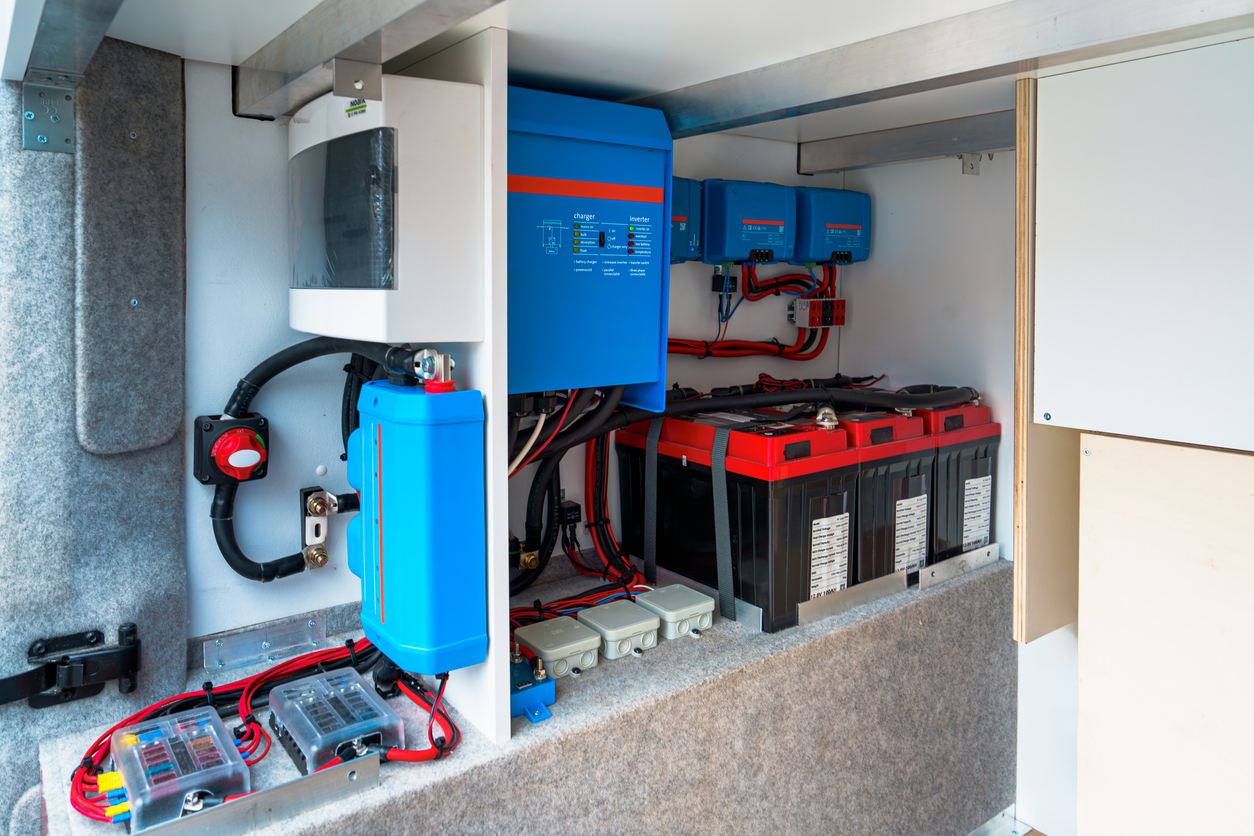
Owning an RV doesn’t just mean you can jump in and hit the road. Like any other car or your home, there’s a level of maintenance and upkeep to keep in mind. One area you may not have considered is your RV’s batteries. RV batteries serve as the foundation for your RV’s electrical system. They keep the lights on and the kids entertained with the TV on those long trips.
Over time, most batteries wear. They may even fail to work because they do not hold a charge. There are several things you need to know about RV battery maintenance and replacement. And, if you need more power than the RV battery can offer you, turn to Leasure Coachworks for battery upgrades.
What Type of Battery Is in Your RV?
Differences exist in RV batteries, but there are several common types you’ll likely see, all of which fall under the lead-acid family:
- Flooded wet cell batteries: The most common type, because they are affordable, are 6-volt or 12-volt batteries.
- Absorbed glass mat (AGM) batteries: These are a variation of a lead-acid battery that has ultrafine fiberglass between the lead plates, leading to faster charging times and potentially longer life cycles.
- Gel cell batteries: These are more expensive and require a charger specifically designed for them, but they offer slightly better longevity than AGM batteries for RVs.
- Lithium-ion batteries: Less common, they are becoming more readily accessible in RVs today. If you want to upgrade to a lithium-ion battery for its efficiency, turn to our RV service to do so. Note that they can be more expensive than other forms.
Signs You Need to Replace Your Battery

Most often, RV batteries work in the background, maintaining their charge as the engine works, much like what happens in your car. However, over time, batteries cannot hold their charge properly, leading to failures. The most common signs it’s time to replace an RV battery include:
- It just will not hold a charge: If it just will not charge any longer, it’s time to replace it.
- The RV battery is old. Older RV batteries hold less of a charge and tend to be significantly less efficient. We recommend changing out your RV battery every 5 years, or when the manufacturer recommends it.
- Clicking and clunking noises are a new concern. This could indicate the plates on the RV are separating. This may happen when it is too cold out or the RV battery is overcharging.
If you’re experiencing any of these concerns, you can find the help you need at Leisure Coachworks. We offer a full battery replacement service and can offer guidance on the best type of battery for your rig.
Differences in Car Batteries and RV Batteries
There are differences in car batteries and RV batteries, and they are not interchangeable. Car batteries provide short, high-current bursts of energy. They’re meant to start the engine. However, RV batteries have to keep working. These are deep-cycle batteries that provide a lower level but consistent amount of power over long periods of time. That’s because these batteries need to keep your vehicle’s refrigerator, TVs, and other accessories running.
Consider the differences that exist beyond this:
- Car batteries have a higher cranking amperage for that one-time burst. This shortens their lifespan.
- Deep-cycle batteries discharge at about an 80% lower rate without performance impact, which makes them ideal for RV appliances.
That’s also why it helps to turn to an RV repair technician when you need to replace or upgrade your RV batteries. Avoid just heading to a local auto repair shop unless they have actual RV repair experience. As one of the most common RV maintenance and repairs, make sure you’re using a trusted professional.
RV Battery Maintenance
Maintenance on RV batteries can differ somewhat based on the vehicle itself and your use of it. The following is an overall, general view of the types of RV battery maintenance most vehicles need:
Daily monitoring:
- When using your RV, monitor your voltage levels. They should not drop under 50% for lead-acid batteries, though Lithium-ion batteries can handle a deeper discharge without negative impact.
- Keep things you don’t need off, off. We call these a parasitic load – things that run and draw power constantly. This could include your propane detector and the refrigerator’s circuit boards. When not in use, don’t keep them operating.
- When possible, consider solar charging, as this will keep the batteries topped off but will not lead to overcharging.
Routine battery maintenance for your RV:
- If you have flooded batteries, you should check the water levels in them about once a month. If lower than ideal, top them off with distilled water (do not use anything else)
- Test the voltage of your batteries under load. This will give you an idea of the overall weak cells and indicate that there’s likely a need for replacement.
- Monitor for corrosion. If you see any buildup of corrosion, it’s best to clean this with a slurry of baking soda and water. That corrosion impacts function.
Also, notice any changes to the battery. If you notice that your RV battery has a leak, a crack, or is swelling or bulging, it’s time to call for RV repair service. Do not operate your vehicle with a battery like this.
Seasonal storage for your RV battery:
Like with everything else for your RV, seasonal storage is a big factor in extending the battery life. To protect the battery for long-term function:
- Charge the batteries fully before you store them.
- Then, disconnect the battery from the RV, or alternatively, use a battery disconnect switch if you have one installed.
- Store the RV battery away from heat and direct light, but look for a dry and cool place.
If you are storing lithium batteries, do not charge them, but rather store them at 50% of a charge if you do not plan to use them for several months.
Need RV Battery Repairs?
At LCW, we offer a range of services to help you keep your RV on the road and functioning the way you desire. If you need any RV upgrades, talk to our team about the options. We can create custom brackets and cabinets for your battery banks. If you have an idea or a need, reach out to us for immediate help.
Find What You Need at Leisure Coachworks
At Leisure Coachworks, we offer comprehensive RV parts and service. That includes helping you to replace your RV battery, maintain it, or even upgrade it if you’re looking for better performance. Your battery keeps you going, and we can assist you with any necessary repairs. We also offer all of the RV parts you need to keep your vehicle on the road. Contact us to learn more.